How can you achieve networking in remote teams without it feeling forced? A co-creation project using Design Thinking.
Brief overview
-
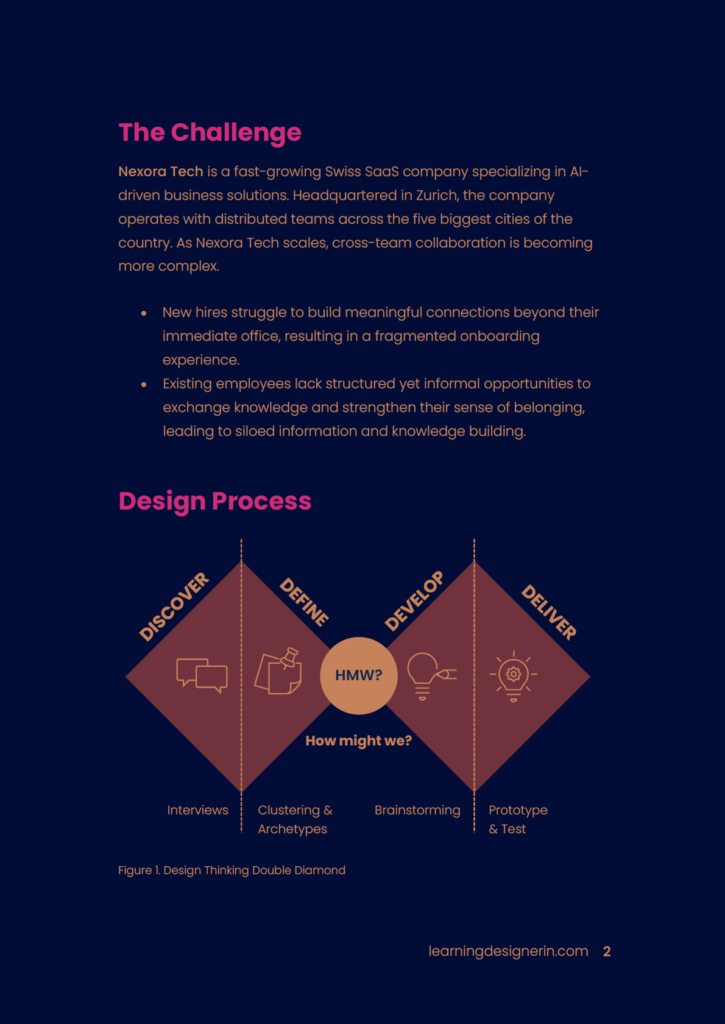
Role: Research, concept, prototype and testing, as a learning designer in a public administration
-
Methods: Interviews, Archetypes, How-Might-We-Question, Prototyping and Testing (Double Diamond)
-
Platform: Microsoft Teams
-
Year: 2025
Starting position
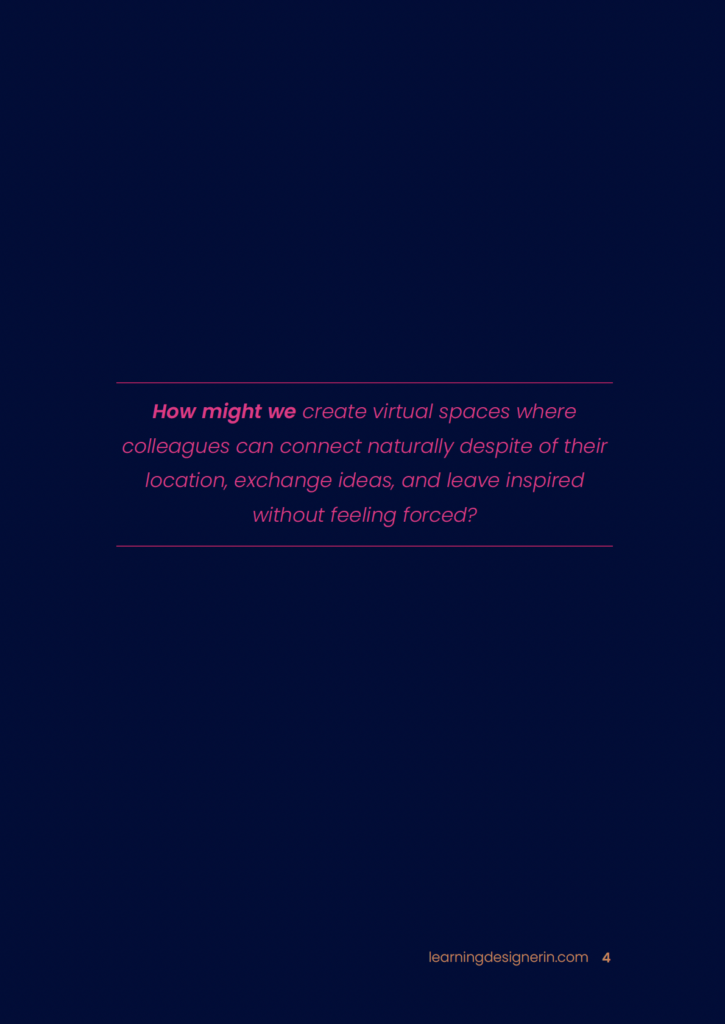
Remote and distributed teams rarely have opportunities for informal conversations and spontaneous exchanges. Distance and full calendars lead to silos that hinder cross-departmental collaboration and weaken the sense of belonging. How can we create virtual spaces where colleagues can naturally connect, exchange ideas, and be inspired regardless of location, without it feeling forced?
Solution
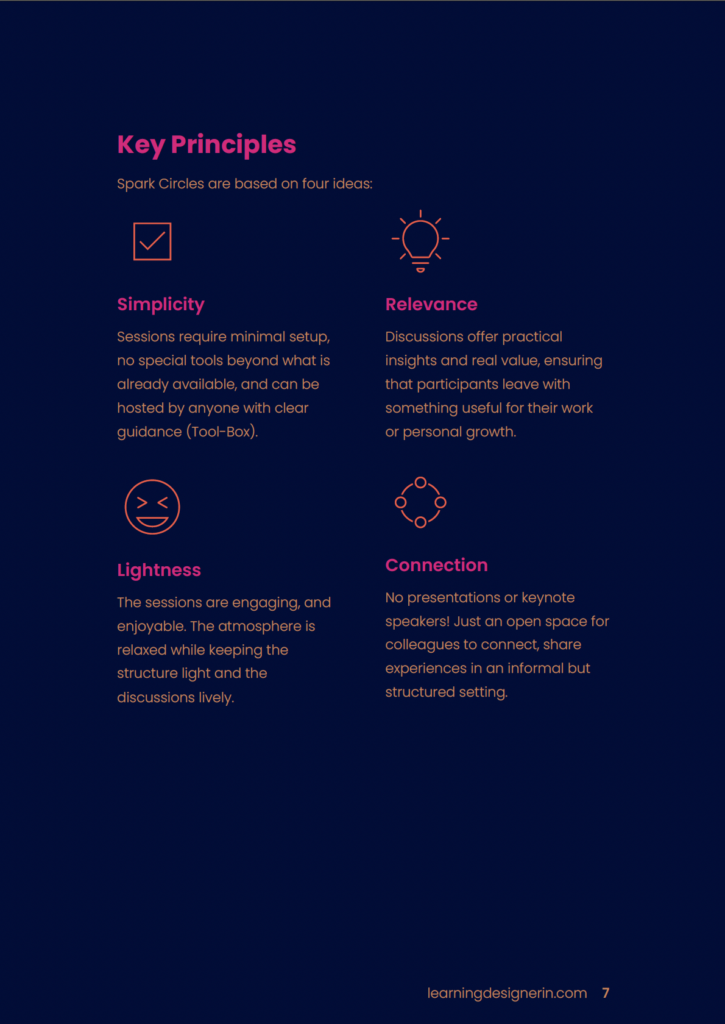
Spark Circles* are informal, voluntary lunchtime sessions where colleagues meet in small breakout rooms to share insights, discuss challenges, and explore new ideas across locations. The sessions take place every two weeks, are organized by volunteer facilitators, and are moderated by the participants themselves.

Result
The test group particularly appreciated the simplicity and brevity of the format, the ability to choose conversation topics, and the opportunity to learn something new about their colleagues. The balance between added value and time commitment is crucial. A ready-to-use toolbox with topics and activities for volunteer hosts helps overcome time pressure and skepticism in cross-location networks.
Takeaways
The most important step was to talk to people and understand their mindset. Connection grows from formats people build together. To fit into a full working day, they need to be simple and quick.
* Developed during my time as a Learning Designer in a public administration. The name and details of the organization have been changed.
Connection doesn't happen on its own, but it can be shaped.
Let's figure out what a tailored solution for your context might look like.